Utility-scale photovoltaic (PV) plants frequently exhibit discrepancies between measured energy production and model-based expectations, leading to uncertainties in performance assessment, operational diagnostics, and financial forecasting.
A 9.8 MWac PV plant in Colombia showed persistent underperformance, reflected in a Performance Ratio (PR) below target and an Energy Performance Index (EPI) systematically different from unity. These deviations may arise from both technical faults and modeling inaccuracies.
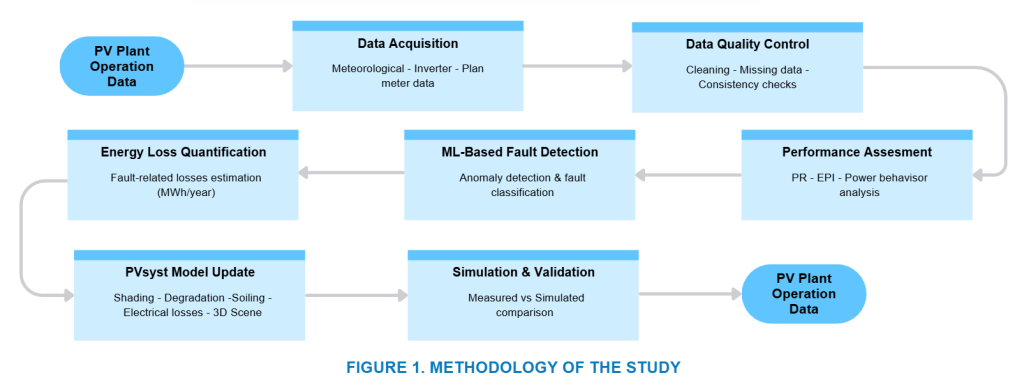
This work presents an integrated performance diagnosis framework that combines:
to distinguish real operational losses from modeling bias and improve the accuracy of energy predictions.
An integrated diagnostic framework was developed combining data analytics, automated fault detection, and physics-based modeling:
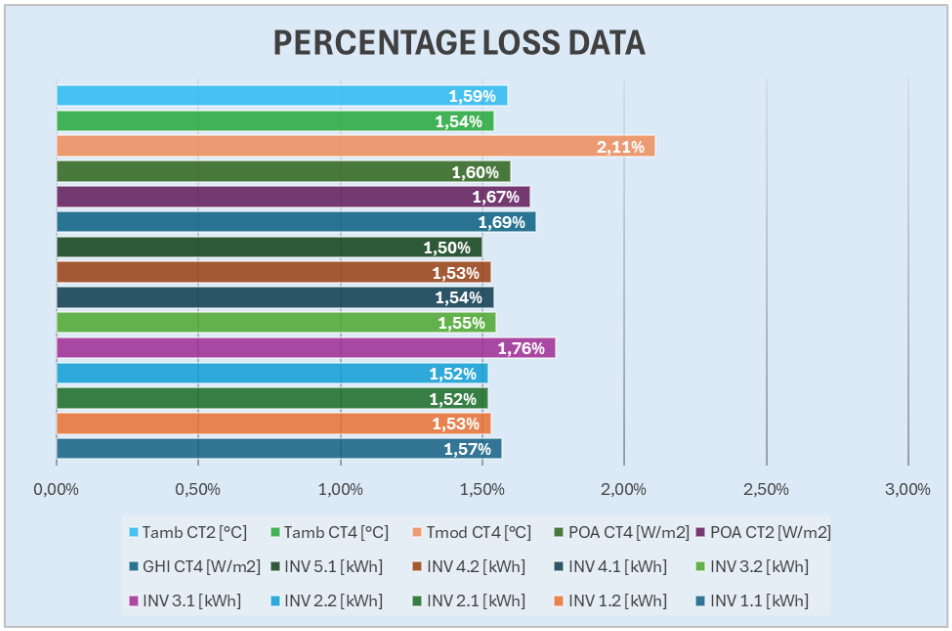
A comprehensive assessment of operational data quality and performance indicators was conducted to establish a reliable baseline of the plant’s actual behavior and to quantify deviations between measured and expected energy production.
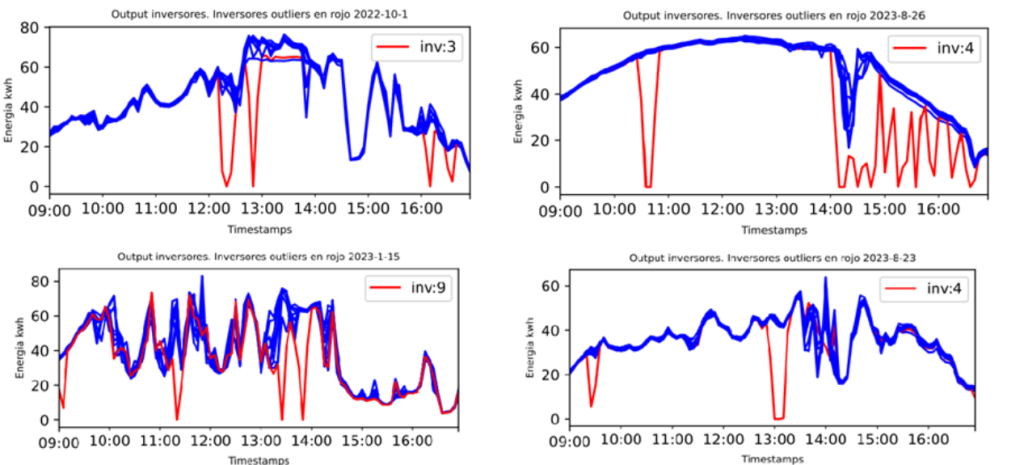
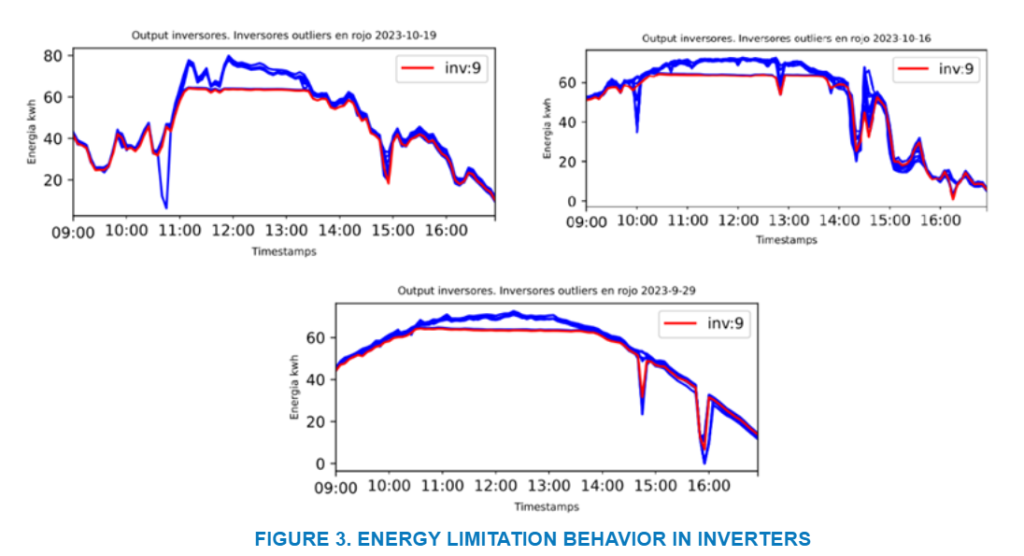
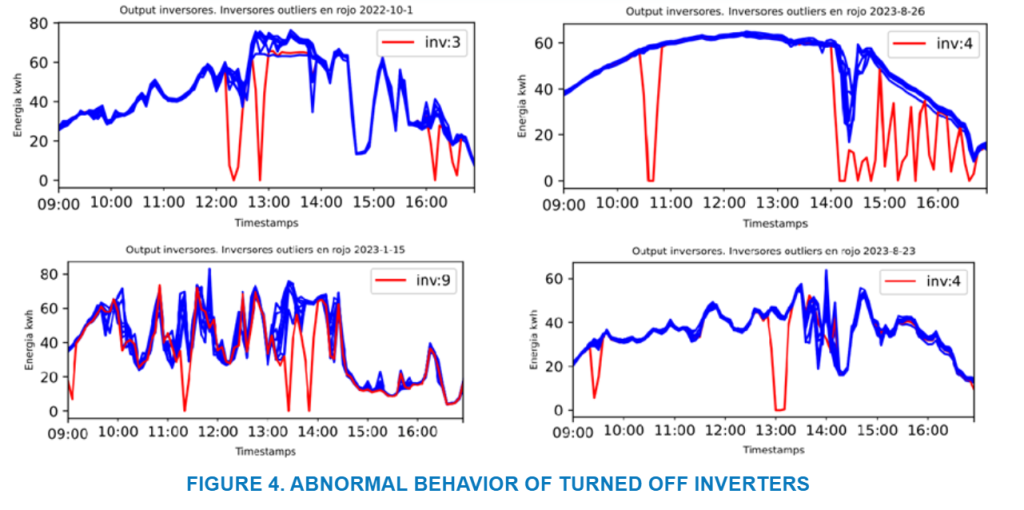
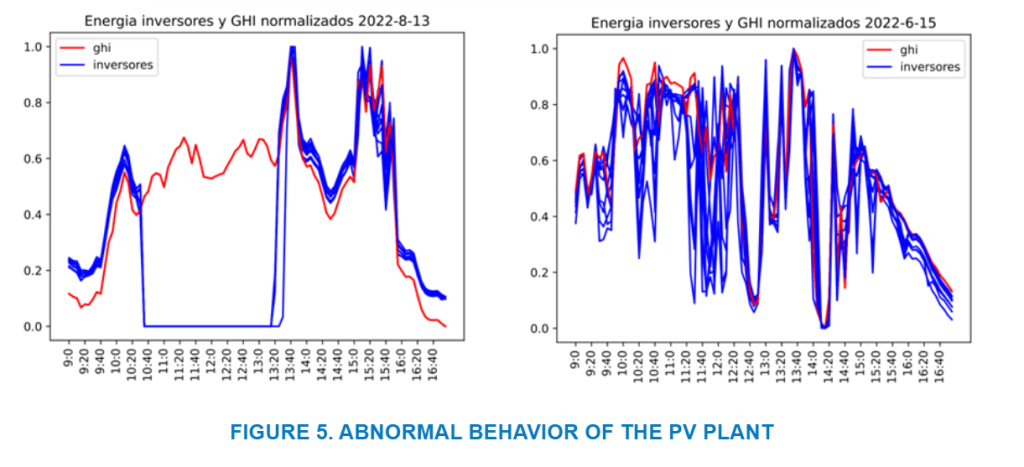
Using the cleaned datasets, automated anomaly detection techniques were applied to identify operational faults at both inverter and plant levels, and to estimate their direct contribution to annual energy losses.
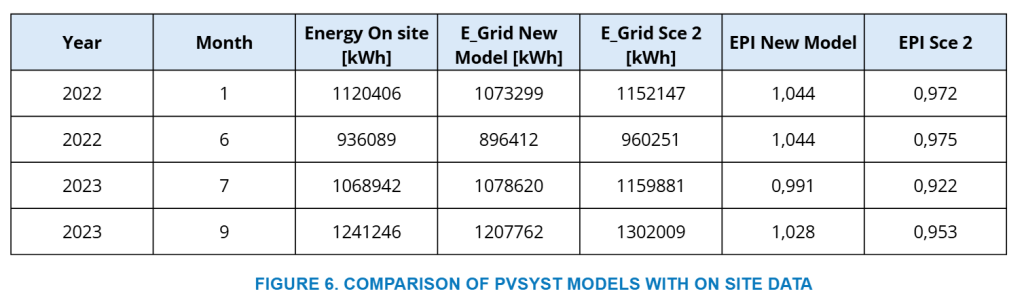
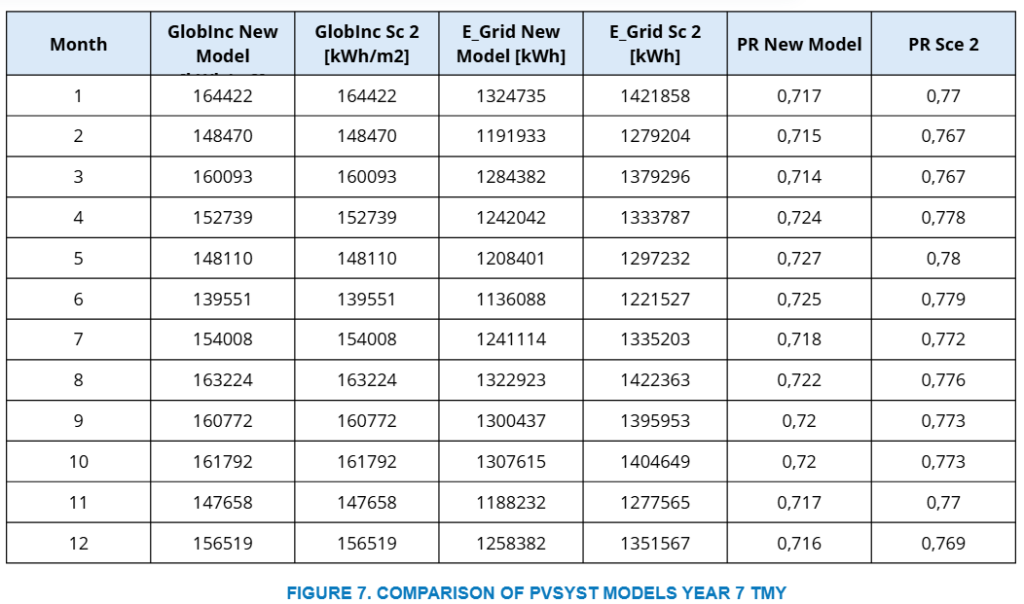
Finally, the simulation model was adjusted by incorporating site-specific physical conditions and validated against historical measurements to reduce prediction bias and improve energy estimation accuracy.
[1] AbdukMawjood, K., Shady, S., & Walid, G. (2018). Detection and prediction of faults in photovoltaic arrays: A review. Proc. IEEE CPE-POWERENG.
[2] China General Certification Center & Huawei Technologies Co. (2020). Smart I-V Curve Diagnosis. Technical report.
[3] Jordan, D., & Hansen, C. (2023). Clear-sky detection for PV degradation analysis using multiple regression. Renewable Energy.
[4] Kontges, M., Kurtz, S., Packard, C., Jahn, U., Berger, K., Kato, K., & Friesen, T. (2014). Review of Failures of Photovoltaic Modules. IEA-PVPS T13-01.
[5] Parson, C. (2021). What is a machine learning model? NVIDIA Technical Blog.
[6] Reno, M., & Hansen, C. (2016). Identification of periods of clear-sky irradiance in GHI time series. Renewable Energy.
[7] Venkatakrishnan, G. R., et al. (2013). Detection, location, and diagnosis of faults in large PV systems: A review. Int. Journal of Low-Carbon Technologies, 659–674.
Brindamos soluciones integrales para el desarrollo de proyectos fotovoltaicos en Colombia y Latinoamérica
Copyright © 2025 Ingeniería Creativa | Desarrollado por Matallana Design y 2n Team